Bishop Bryan Bayda spoke at the graduation ceremony of St. Gabriel’s Institute in the United States
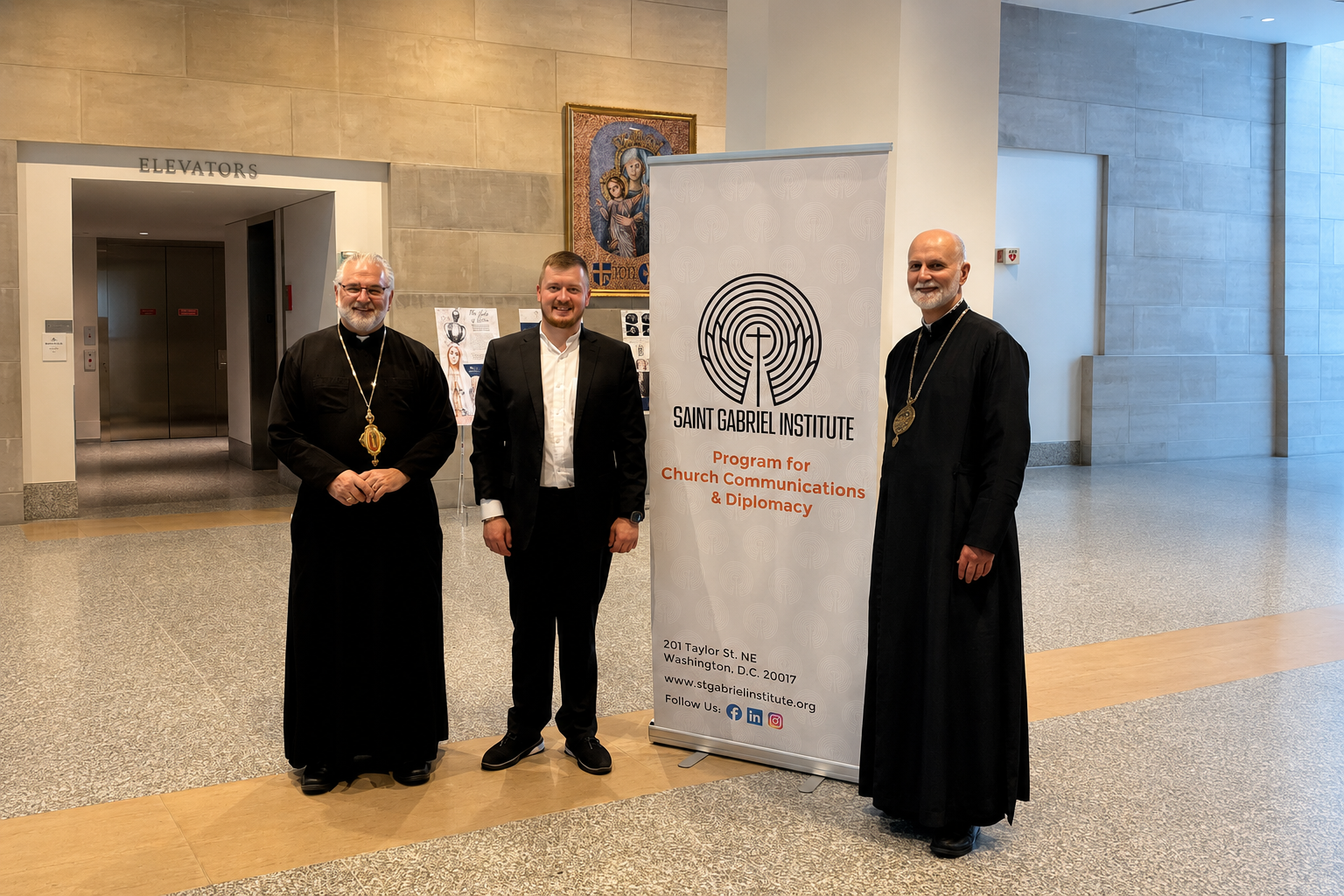
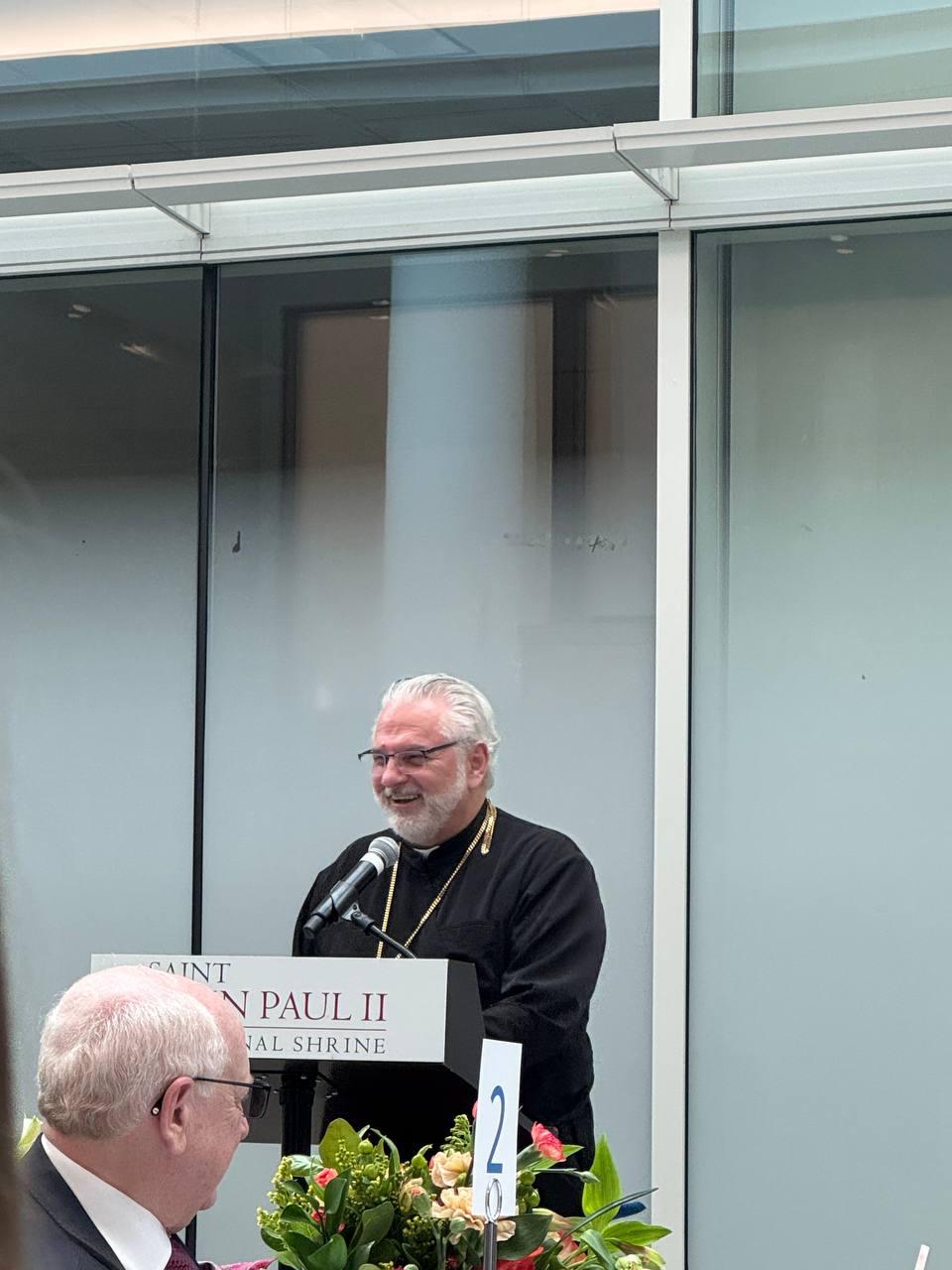
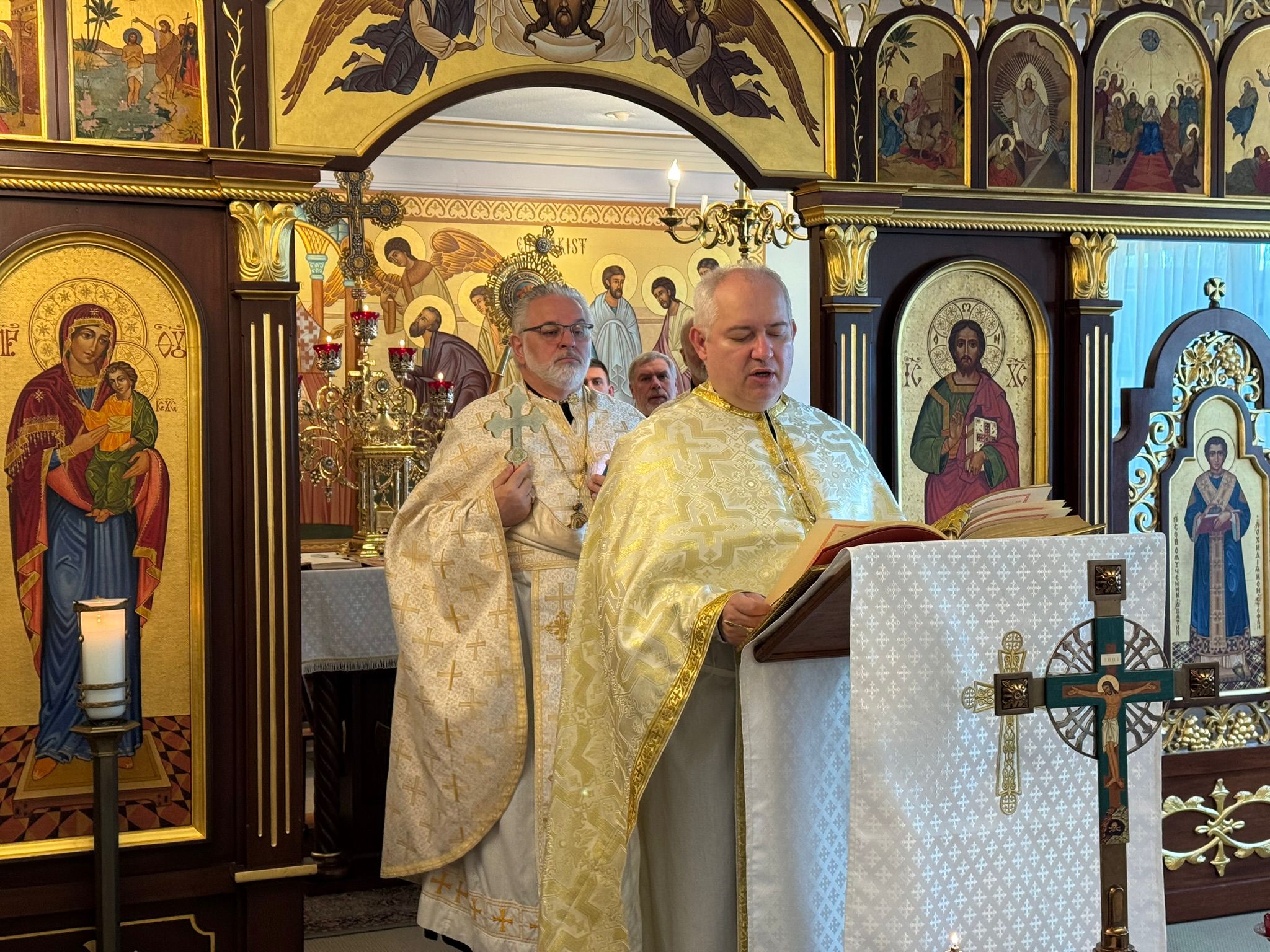
Bishop Bryan Bayda, head of the Patriarchal Commission for Youth of the Ukrainian Greek Catholic Church, took part in the graduation ceremony of St. Gabriel’s Institute in Washington, D.C. The event brought together students, faculty members, clergy, diplomats, and representatives of the Ukrainian community around the themes of Christian leadership, Church diplomacy, and service in the modern world.
On May 16, 2026, a solemn graduation ceremony of St. Gabriel’s Institute — an educational program in the field of Church communication and diplomacy — took place in Washington, D.C.
One of the central moments of the evening was the address delivered by Bishop Bryan Bayda, who shared reflections on the meaning of authentic Christian diplomacy and the vocation of Church leadership in the contemporary world.
In his speech, Bishop Bryan emphasized that true diplomacy is grounded not only in techniques, political strategy, or communication skills, but above all in an encounter with Jesus Christ. Referring to the examples of Saint John Paul II, Saint Teresa of Calcutta, the Samaritan woman, and the Most Holy Theotokos, he spoke about authenticity, integrity, human dignity, and spiritual “thirst” as essential qualities of a true representative of the Church.
The bishop particularly stressed that a Christian diplomat is called not merely to represent an institution or a position, but first and foremost to be a witness to Christ through personal authenticity, humility, and the ability to recognize the dignity of every human person.
He also underlined that the modern world needs not only professional communicators or diplomats, but people capable of uniting intellectual formation with genuine spiritual life and service.
The evening concluded with words of gratitude for the work of the Institute and with hope for the future service of its graduates in the Church, academia, public life, and international ministry.
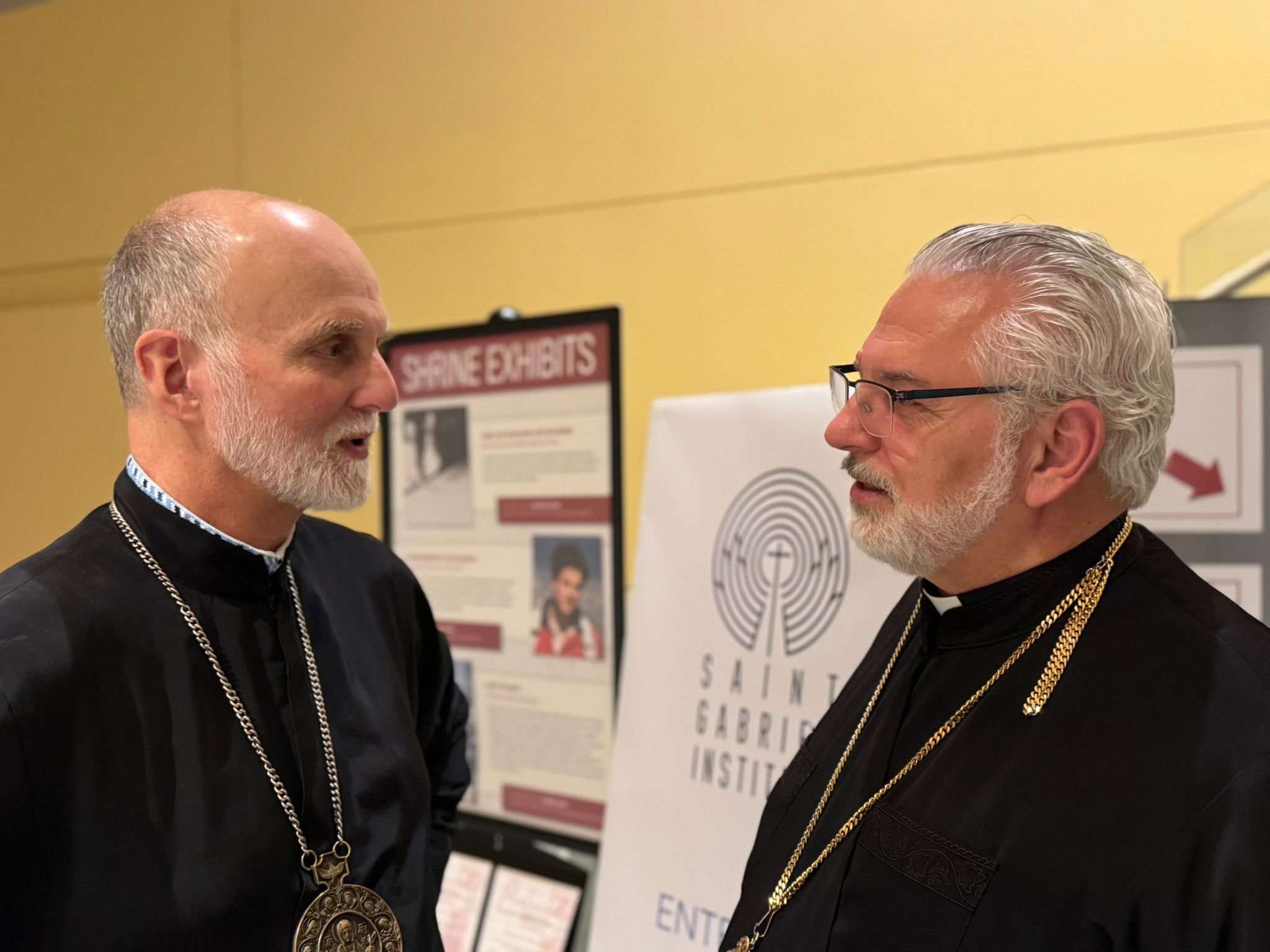
Bishop Bryan Bayda's speech on the graduation of St. Gabriel's Institute (Washington, DC) - May 16, 2026
I'm going to ask you to start with: who's your favorite ambassador or diplomat the whole time? Because when you start doing that, you're going to have to start doing the check boxes. Well, this person is this or this or this, or what outstanding characteristics or gifts or talents did they have? Was it an elected official? Was it a church personality, a hierarchy? Was it a friend of yours? Was it a grandmother who is the best diplomat that you know, or in recent history that you've seen, perhaps on some of the media feeds? Is it a pope? Is it a saint? There could be any number of those, and my favorite among them certainly could include anybody that is holy, because holy brings together a lot of things. It doesn't mean you're perfect, but you acknowledge authentically who you are and the dignity that you have.
And so, here we are in this wonderful edifice dedicated to a saint that is probably not a stranger to any one of us: Saint John Paul II. What would make him a great diplomat, or Saint Theresa of Calcutta? What personality characteristics, elements, do they have that would make them great global diplomats or ambassadors? And that's probably their focus.
I like to put it this way... thirst.
Mother Teresa often spoke about thirst. She quotes Jesus, saying, “I thirst,” from the cross. And I think if we compare them — Mother Teresa of Calcutta, Saint Teresa of Calcutta, and John Paul II— they had a thirst, and I want you to recognize for whom they thirsted.
The other question that I'm going to pose to you is: “Do you thirst for Jesus as well?”
I think this is core to being a good diplomat and an ambassador.
Let me help you identify thirst.
I'm a young guy, 15 years old, on a farm, and a truck goes into the yard. My dad starts talking with the guy; he's leaning on the truck. The guy didn't even get out of his truck. He's sitting there talking, and it's going on 5-10 minutes, and I find him moseying on out, and I took a peek in the back of the box, and the guy's got five-gallon pails of paint and a paint sprayer and all the ladders you need, and my eyes try to make a picture: paint some of our buildings on the farm.
And he's been here a while — it's 15–20 minutes already — and I'm saying, “What's driving him? What's compelling him to sit there?”
I mean, my dad was kindly saying, “No, we just painted a year ago.”
“Yeah, but I'm notpressure-painting your barn,” and he was going at it again and again.
And then I noticed finally, he's sitting there talking to my dad, and on the rear-view mirror he had a pair of baby shoes. That was his focus. That was his thirst.
Focus. Thirst.
Where is yours? What is it focused on? Who do you thirst for?
From Scripture, I'd have to say one of my favorite ambassadors is the Samaritan woman. Here's a woman who we basically know credentials, if you will, encounters Jesus Christ. As we know, Saint John Paul II said in “Ecclesiastes of America,” just before the third millennium in 1999: “To encounter Jesus Christ leads to conversion, to communion and solidarity.”
Conversion, communion, and solidarity.
It's encounter. This is huge. And we get to encounter Jesus every second of the day — sometimes more profoundly in quiet meditation, sometimes on the street at a red light, sometimes at a banquet, sometimes at a funeral, a wedding, another celebration, sometimes joyful or sad occasions. We continue to encounter Jesus Christ.
She had, after encountering Jesus, authenticity. She acknowledged her sinfulness. She had integrity. She, because of that encounter with Christ, had an intense awareness of her dignity, and she spoke with courage, she spoke with conviction, and she went to her very — let's call them enemies — who avoided her, and they couldn't believe the transformation.
Why is she coming to us? Why would she even waste her breath speaking to us? What happened to her?
She encountered the Lord.
And so, if we apply some of these characteristics of the Samaritan woman: she went to these people with authenticity, integrity, dignity, and she noticed the integrity and the authenticity and the dignity in the people to whom she spoke. If they didn't have that, she wouldn't have wasted her time.
She recognized her dignity as a result of encounter with Christ, and she recognized the dignity of everyone else.
To encounter Christ — this, I think, is the core for diplomacy. This is what brings us to Christ.
Second to the best, however, would be the Theotokos.
In a spirit of imaginative prayer, or application of the senses, as explained by the Jesuit prayer type —sit at the Nativity, smell the hay, feel the dank air, put yourself right in that situation — so I use this type of prayer often, and I'm with the Mother of God.
And in this type of prayer she says:
“Bryan, Bryan, I wish you could know what it was like when the Archangel Gabriel came to me on behalf of the Holy Spirit and spoke to me. And at the speaking of those words, ‘Hail Mary, full of grace, the Lord is with you,’ I was transformed... completely... everything. I had the very blood of Jesus in my veins. My heart beat with His. I would wish you knew what that was like.
Now, granted, the Holy Spirit filled me from birth. I was granted to be sinless so that I could be the person that God the Father would come to and, with humility, ask me: ‘Would you, please? I want someone to see my hands. I want them to see my face. I want them to hear my compassionate voice and embrace, and I want to send my Son... would you be the mother for my Son?’
How's that forhumility?”
She said, “Yes, of course.”
She said, “Yes, of course.”
And so she's saying: “How can I share this with you? How can I express this?”
In God's wisdom, even though Bryan — even though you're a sinner and you have to repent your sin and stuff like that — there's still kind of a way that you can experience something similar to, certainly not the same ever, but similar to the indwelling of God.
And so every time you go to communion, Bryan, start preparing. Pray with Gabriel.
And so I have. I go and sit down with him, and he said, “How good is that? You got chosen, of all the spirits, of all the angels, to say the words to the Mother of God that she will never, ever forget — not for a second — that changed her life forever, ever: ‘Hail Mary, full of grace, the Lord is with you.’”
So, when you go to prepare for the reception of the Eucharist, go to confession, acknowledge your sinfulness, repent, and prepare to experience what I — in some small way — experience, in some small way, what I did: the very blood of Jesus Christ in your veins, beating with your heart.
This grasp is the core of diplomacy.
Jesus himself was the best diplomat, ambassador. He was God himself, and always did present it, gave us the Father.
“If you see me, you see the Father.”
That's the perfect ambassador. That's the perfect diplomat. That is the perfect evangeliser.
So don't lose sight of that when we look at the authenticity, the integrity of Jesus, who is divine and yet fully human, who entered into the mind and body and soul and heart of the Mother of God.
This is part of the plan for us, albeit in a different way, a different intensity.
Perhaps this is what it means to be a pastor: encounter Jesus Christ. Let that conversion lead you to communion and solidarity with others.
Yeah, we learn a lot of techniques and languages and, you know, lobby techniques and all those other kinds of things, and they're very good and they're very useful and very helpful, but they will disappoint you if you don't have at the center of your diplomacy an encounter with Jesus Christ.
So, be a good ambassador of God. Learn from the saints, the holy people. Don't wonder who the best ambassador is next time you're asked — jump on that answer, as you know you can.
So, you don't have to tell everyone everything you know. But if you do know something — and we all know something — tell it with authenticity, integrity, and share it with a humility that is becoming who you are: the child of God.
Thank you.
ПІДТРИМАЙТЕ ДИВЕН СВІТ
проєкту

ЧИТАЙТЕ ТАКОЖ