Don’t speak about young people without young people: how the Ukrainian Greek Catholic Church is looking for ways to connect with the new generation
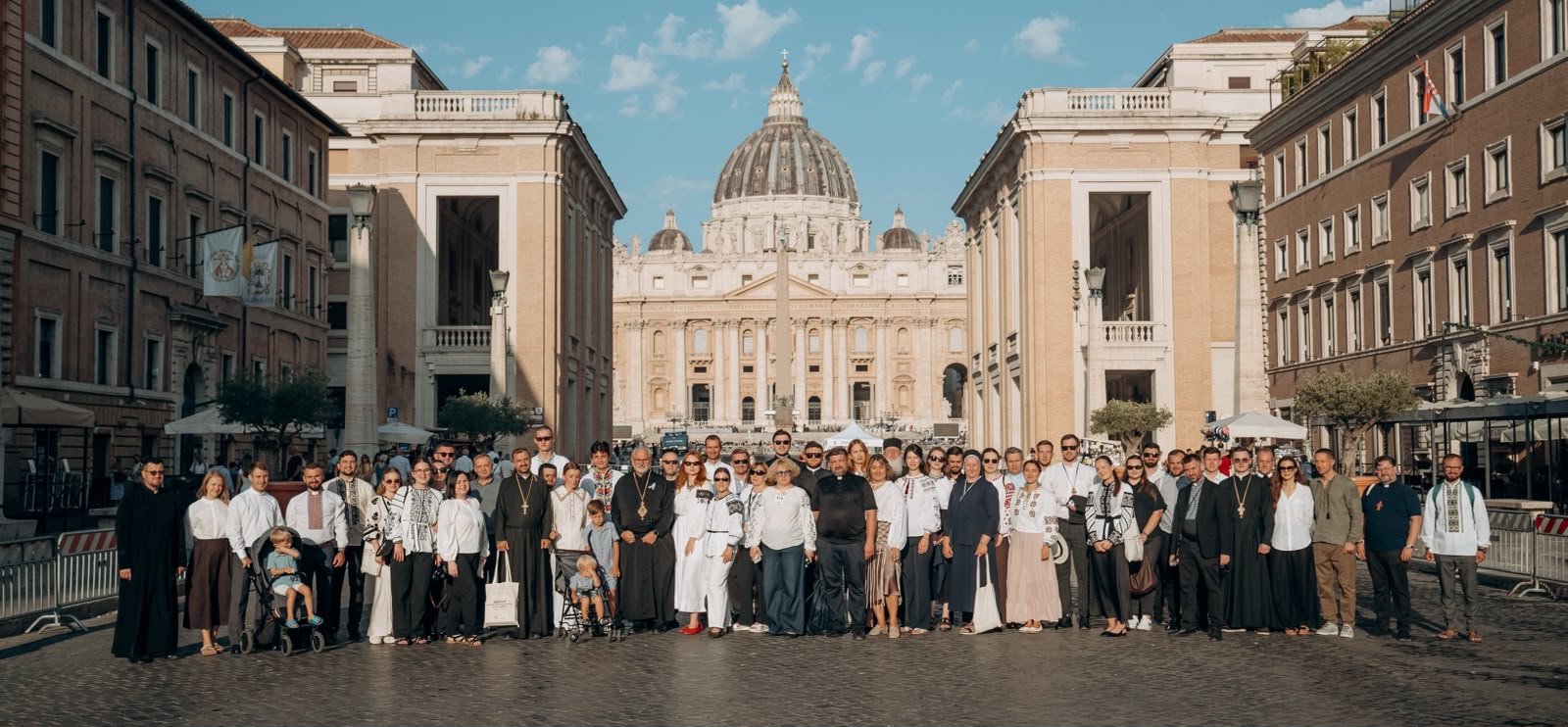
Cultivating spiritual, national, and cultural identity is the thread that unites Ukrainians in Ukraine and beyond its borders. Participants of the Forum on Youth Pastoral Ministry of the UGCC in Europe — Bishop Bryan Bayda and Natalia Pavlyshyn — spoke about how the Church can help young people preserve this connection, experience their own dignity, and find their place in the community.
Svitlana Dukhovych- Vatican
Participants of the Forum on Youth Pastoral Ministry of the UGCC in Europe
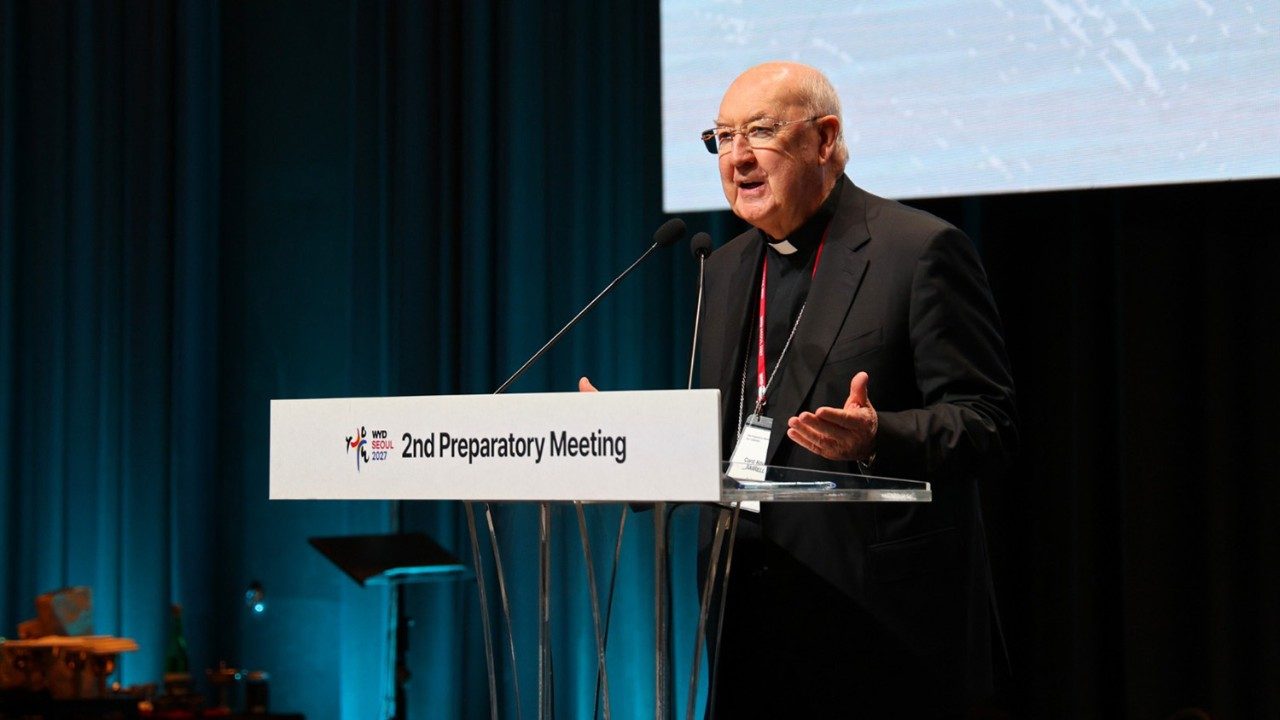
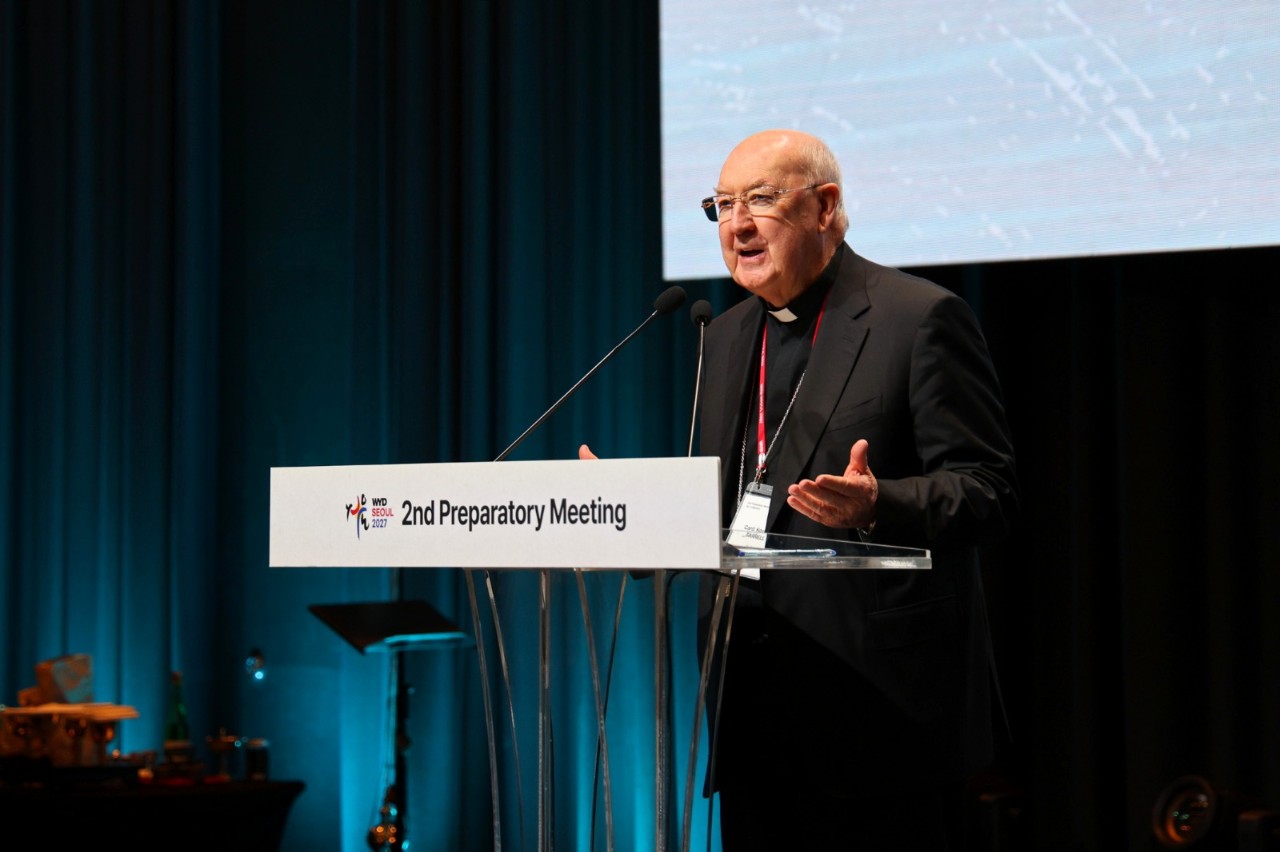
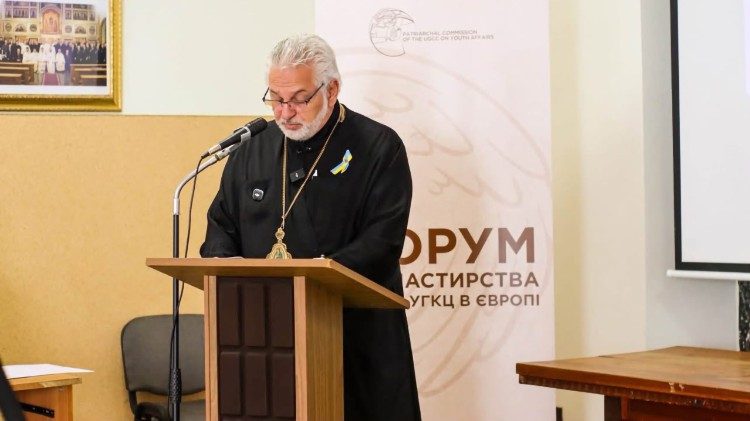
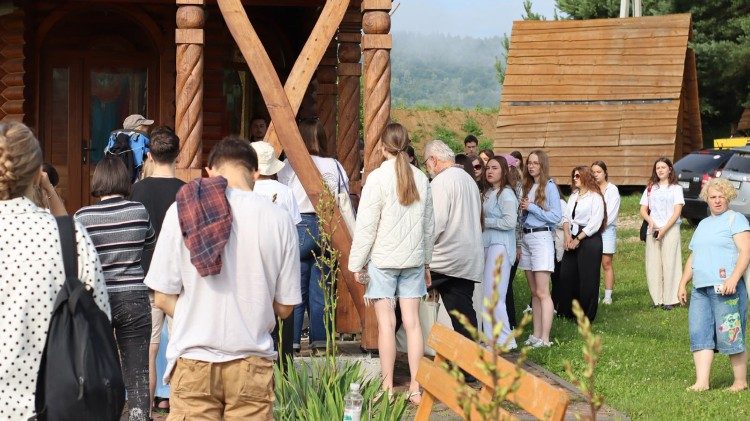
“Be like Mary, who sits at the feet of Jesus and listens. Go and be with the youth. Give them your time and yourselves, instead of trying to fit them into your own plans.” With this appeal, in an interview for Vatican media, Bishop Bryan Bayda, Eparch of Toronto in Canada and head of the UGCC Commission for Youth Affairs, addressed the clergy, families, and all the faithful — especially those living abroad who ask themselves: “Where is our youth? Why don’t they go to church?” This same appeal was also voiced during the Forum on Youth Pastoral Ministry of the UGCC in Europe, held in Rome from 8 to 10 September 2026, even before the interview.
“This forum shows how young and open to youth the Ukrainian Greek Catholic Church is. It is a signal that we are ready to change, develop, and walk together with the young.”
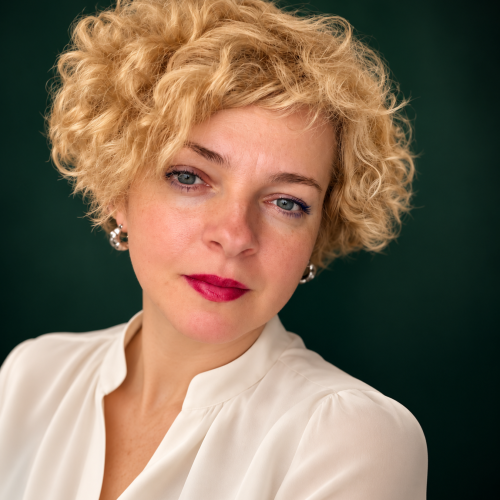
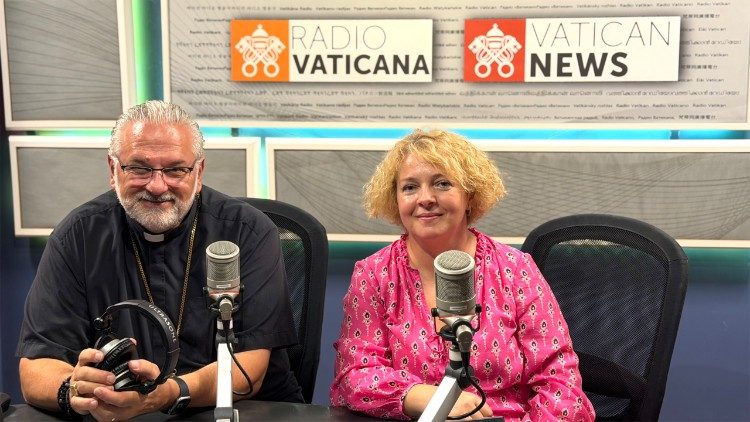
Natalia Pavlyshyn, head of the press service of the Patriarchal Commission of the UGCC for Youth Affairs and editor-in-chief of the Divensvit media portal, who also took part in the forum and, together with the bishop, visited the Ukrainian editorial office of Radio Vatican – Vatican News, emphasized this. Our interlocutors spoke about the main ideas that emerged during the event and shared their experience and vision of what can encourage young people to come to the Church and take an active part in its life.
From Bustle to Presence
Participants of the September forum gathered in Rome to discuss the experience of Ukrainian youth abroad, their connection with the Church, and to analyze the results of a survey in order to identify guidelines for further work with young people. Bishop Bryan emphasized that, despite the long journey from Toronto to Rome, he, as head of the Commission, wanted to attend the forum in person “to be together with these young Ukrainian leaders who had gathered from all over Europe.” He stressed the importance of presence itself, which, in his words, is one of the key elements of youth pastoral ministry.
“Very often, when working with youth, we can be like Martha from the Gospel of Luke, who is busy with many things,” he said. “We have our own vision, our own plans, and our own idea of how young people should fit into our world. Mary, however, sat at His feet and listened to what He was saying. Jesus Himself tells us that what is far more important is to sit and be near Jesus Christ.” The bishop underlined how essential it is to help young people understand that they are of great value — “they are a true treasure for the Ukrainian Catholic Church.”
Spiritual, National, and Cultural Identity: What Unites Ukrainians in the World
The meeting in Rome made it possible to discuss the challenges of youth pastoral ministry in wartime conditions. Spiritual, national, and cultural identity are three things that, according to the Eparch of Toronto, Ukrainians — including young people — defend while fighting on the battlefield, working, or studying in the cities and villages of Ukraine. “At the same time, this is precisely how we see ourselves when we find ourselves in other countries outside Ukraine,” the bishop emphasized. “We are there to defend, promote, and nurture our cultural, national, and spiritual identity. This is the thread that unites all Ukrainians— both the millions who are currently outside Ukraine and those who remain in the country.”
Bishop Bayda stressed the need to engage people who belong to the third, fourth, or fifth generation of Ukrainian migrants and who have never been to Ukraine. “I am one of them,” he shared. “I did not speak Ukrainian from childhood, but for me it is important to try to learn this language, to know it, to speak it, and to appreciate it.” The bishop noted that working with young people consists not so much in teaching or providing information as in being an example and bearing witness. Instead of asking why young people come to church less often, the bishop called on adults to reflect on their readiness to devote time to them and understand their needs, “and to be like Mary, who sits at the feet of Jesus and listens.
Accompanying youth means being ready to change ourselves
Accompanying youth and simply being present with them is a serious challenge. Because of the inevitable crises of adolescence and dangerous situations, it is hard to remain on the sidelines, restraining criticism or the desire to give advice. How should one act in such moments? Answering this question, the head of the UGCC Commission for Youth Affairs spoke about the experience of Father Elio, a priest of the Salesian congregation, who shared his insights during the days of the forum. When Father Elio was asked what his method consists of, he replied: “This is not my work. This is my life. To be with youth, it must be your life.” Bishop Bryan added that it is about relationships that create a space of mutual trust, where everyone feels heard. At the same time, mentors must realize that these relationships change not only young people but also themselves, if they are ready to open themselves to these changes.
Not speaking about youth without youth: from survey to practical solutions
An important foundation for seeking new solutions at the forum was the preparation that began with a large-scale sociological survey. It covered more than 300 respondents from Ukraine and among youth abroad, because the organizers’ main goal was “not to talk about youth without youth.” Natalia Pavlyshyn spoke about this survey, noting that the organizers soberly assess the limits of such research. Usually those who take part are already active people, while those who are still searching for their path or are indifferent to religious life remain on the sidelines. Observations by priests from Spain, Poland, and Italy point to a complex reality: the new wave of forced migration has brought a very diverse geography and range of attitudes, yet only a small portion of the newcomers have turned to the Church. As Ms. Natalia notes, the possibilities for reaching others are limited: “People who are not very interested in the Church may not even pay attention to it. And that is precisely the problem.” At the same time, the experience of other initiatives—for example, the civic organization “Obnova” in Poland—shows the effectiveness of open events that are not perceived as purely church-related but help attract a wider circle of young people.
That is why the survey focused on the pains, challenges, and real expectations of youth. These results became the foundation for the work of the teams at the forum, whose findings will form the basis of a practical Roadmap for youth pastoral ministry. “One of the biggest problems today is precisely communication and interaction,” Natalia Pavlyshyn emphasizes. “It is not only about coming to church, praying, talking, or eating chips together. It is important to understand how to move forward and how to build lasting relationships.”
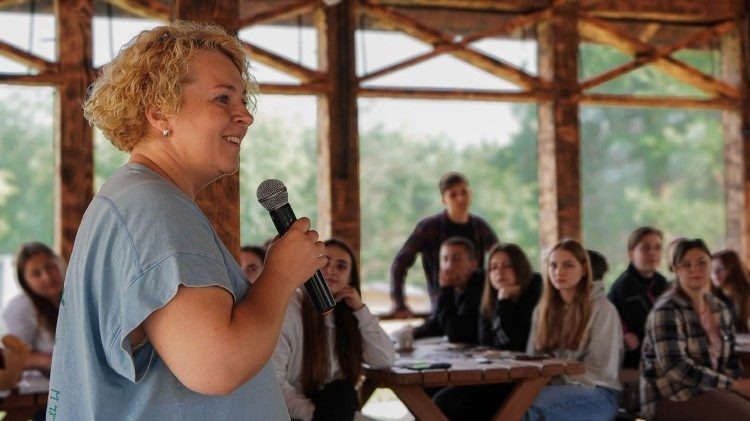
Participants paid special attention to the fact that the youth commission cannot work in isolation. The transition from childhood to youth often leaves adolescents overlooked—they are no longer children, yet not yet fully “youth,” and as a result they end up on the periphery of the Church’s attention. Experience has shown that one way to address this problem is to involve older youth in working with teenagers. They already have enough experience for mentoring, yet they do not create the sense of an age gap that sometimes arises between young people and the clergy. At the forum, the need for close cooperation among several structures—catechetical, youth, and the commission for family affairs—was emphasized. “We conventionally speak of youth up to the age of 35, but we understand that by that time many have already started their own families,” notes Natalia Pavlyshyn. “Accordingly, such people may be interested not so much in youth events as in opportunities for interaction and support of families.”
“Am I important to someone?”
Reflecting on how to bridge the gap between different age groups and find an approach to the younger generation, Bishop Bryan recalled his many years of teaching experience in the minor seminary: successful communication with youth is impossible without previously built relationships of trust. “When they know that you sincerely care about them, they accept your guidance much more quickly and easily,” the bishop noted. “But if you have not established trust and relationships, it becomes much harder to guide them or maintain discipline.”
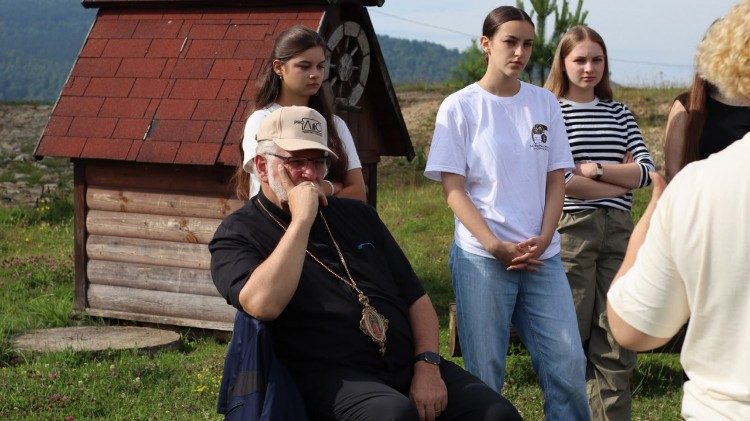
The world around us is changing rapidly—from the days when one telephone line served several families to the modern era of instant media and digital technologies that have radically transformed the way young people communicate. Yet, as Bishop Bayda emphasizes, the basic needs of the human heart remain unchanged. The most important question every young person asks is: “Am I important to someone?” It is precisely from the awareness of one’s own importance, as the bishop stressed, that the trust of which the Gospel speaks begins. He noted that all people long to be part of some community. “For youth it is especially important to know that they belong to something. This is one of the reasons why social networks are so important to them. It also explains why gangs exist. People may do extreme or reckless things simply to feel a sense of belonging. In some cases, however, they end up becoming victims of exploitation. They are turned into a commodity that can be bought and sold; they are treated as objects rather than as persons created by God,” our interlocutor said.
To prevent this, adults must, with understanding and patience, help young people overcome their daily dramas, whether these arise from adolescent complexes or from age-related crises. The task of mentors is to give them a sense of stability and confidence. “We must walk this path alongside the youth so that they understand who they are: children of God, endowed with an innate, inalienable dignity that no one can ever take away from them,” Bishop Bryan emphasized.
People Who Shape Us: On Gratitude, Dignity, and Faith
“None of us grew up on our own. We stand on the shoulders of titans—people who came before us and created before us. In the same way, young people grow by relying on authorities,” emphasized the head of the press service of the Patriarchal Commission of the UGCC, calling on adults not to shift responsibility for the younger generation onto others, but to personally take part in their upbringing and accompaniment.
Reflecting on her own experience, Natalia Pavlyshyn shared that she gratefully remembers the teachers who accompanied her during her studies at two universities. Today, as she herself teaches, she also seeks to learn from her students, because she regards education as a mutual process in which there is no division between those who teach and those who merely receive knowledge. Likewise, a young person is called not only to receive experience but also to develop it and pass it on to others. It is precisely in this mutual growth and the opportunity to share what has been gained that Natalia Pavlyshyn sees one of the important values and sources of meaning for youth.
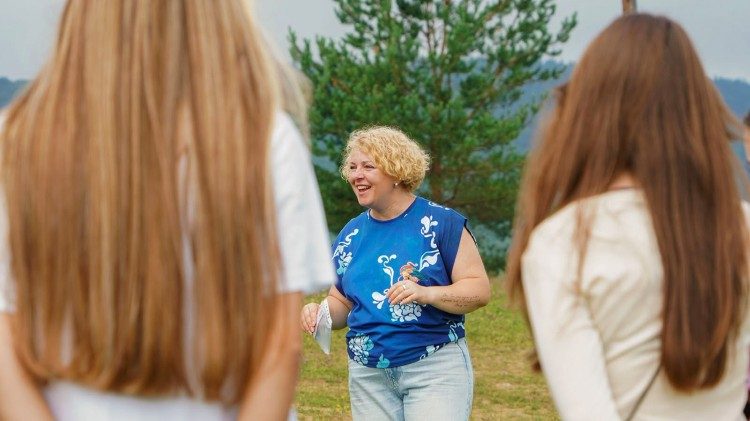
Bishop Bryan Bayda also shared examples from his own life. Among those who most influenced his formation, he recalled the Belgian Redemptorists, who left behind their familiar environment, learned the Ukrainian language and embraced the Eastern tradition. It was among them that he grew up and from an early age came to know an approach to evangelization rooted in local culture. “I also remember my grandfather and grandmother,” he said. “When I think about everything they sacrificed and what they had to endure for us, I sometimes feel almost embarrassed that I do not visit their graves more often. I also remember my school teachers, who put up with me! When I look through photo albums, I see everything my mom and dad went through for me. They are my heroes and heroines. When I look at their lives, I realize that I have dignity because someone gave so much to help me become the person I was able to become. I can appreciate this, learn from it, and pass it on to others.”
ПІДТРИМАЙТЕ ДИВЕН СВІТ
проєкту

ЧИТАЙТЕ ТАКОЖ