«INFLAMA»: 4th Youth Camp Celebrates Three Days of Faith, Fellowship, and Mission.
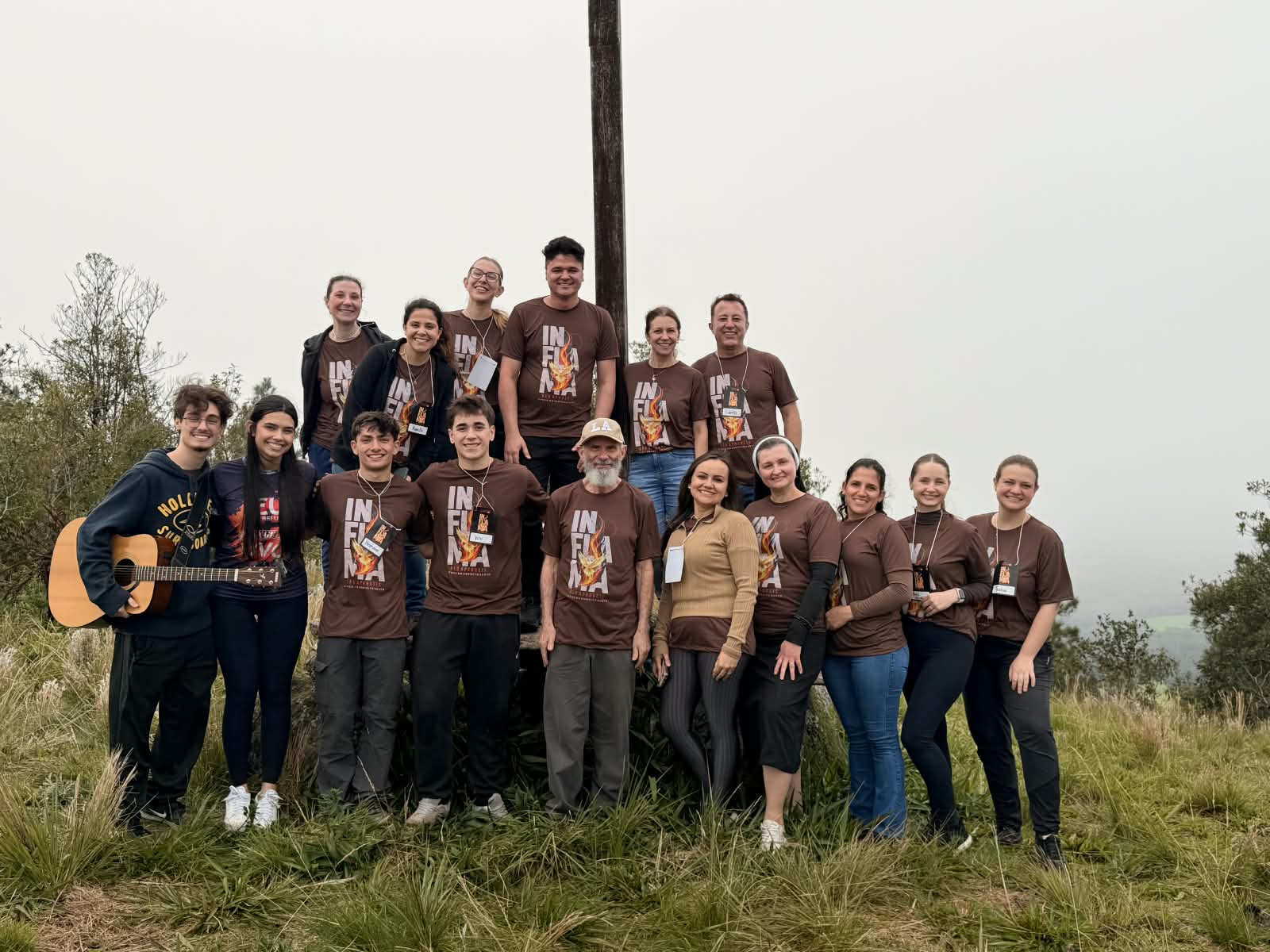
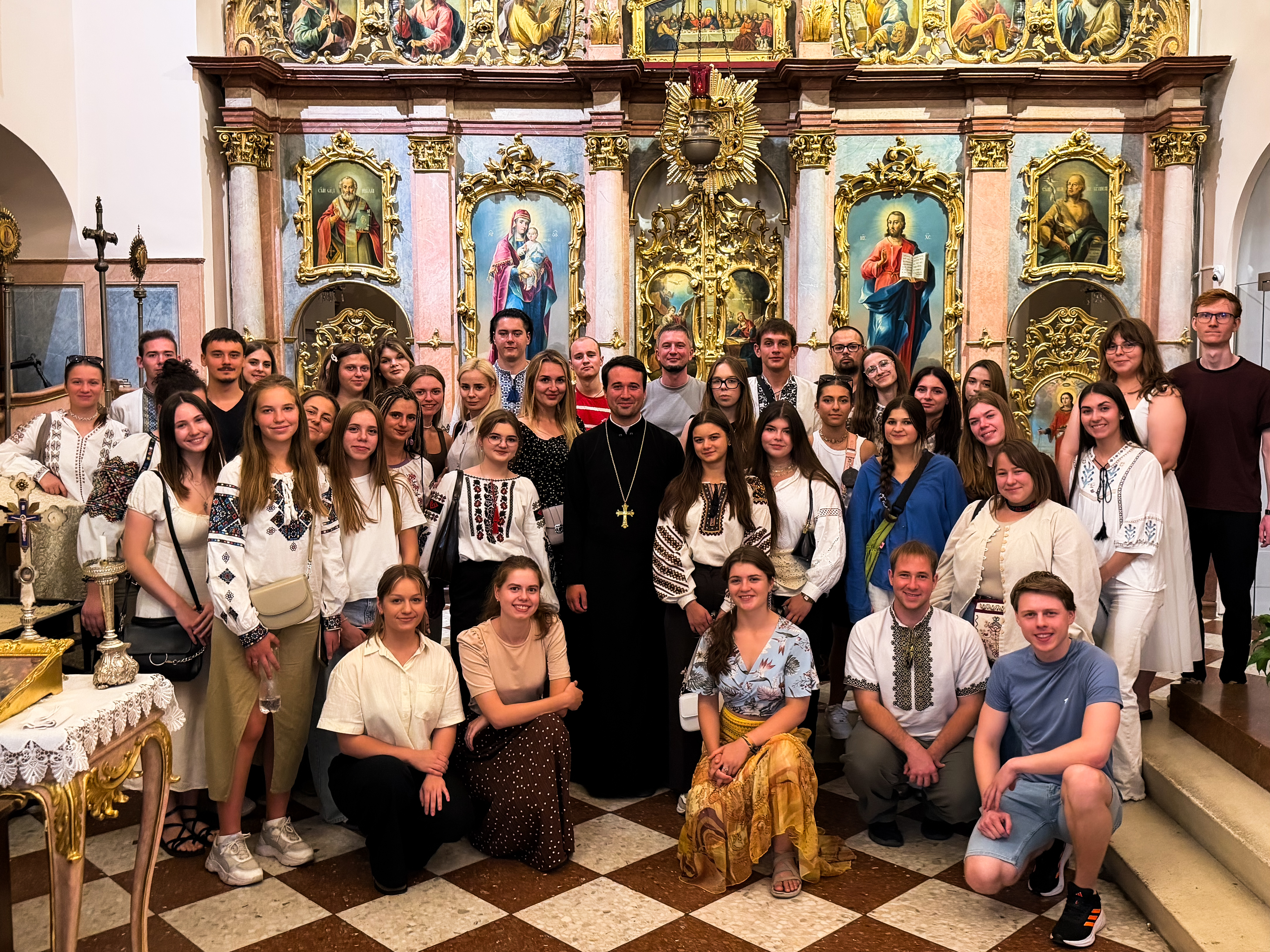
From August 14 to 16, 2026, Our Lady of Perpetual Help Retreat House (Casa Nossa Senhora do Amparo),in Colônia Marcelino, welcomed the 4th Ukrainian Youth Camp, bringing together young people for three days of prayer, formation, fellowship, and spiritual growth. With the theme “Inflama” (“Ignite”) and the motto “Do not quench the fire of the Holy Spirit,” the gathering offered an opportunity to deepen the participants’ faith and reflect on the challenges facing young people today.
More than simply a schedule of activities, the camp was organized as a spiritual journey. Throughout the three days, participants were invited to recognize what can weaken their interior life, rediscover the action of the Holy Spirit, experience God’s mercy, and understand that faith must be transformed into perseverance, witness, and mission.
The main speaker, Kamilla Aparecida Batistelli, led important moments of formation. Music and activities were led by Maria Angélica Pirovaski Marcelino, Vinicius Gonzaga Domingues, Henrique Colturato da Cruz, Renan Castilho Andrade da Silva, Leonardo Arthur Cardoso Taurinho, and Rhaissa Fielkoski Nadolny, who accompanied the various moments of prayer and fellowship.
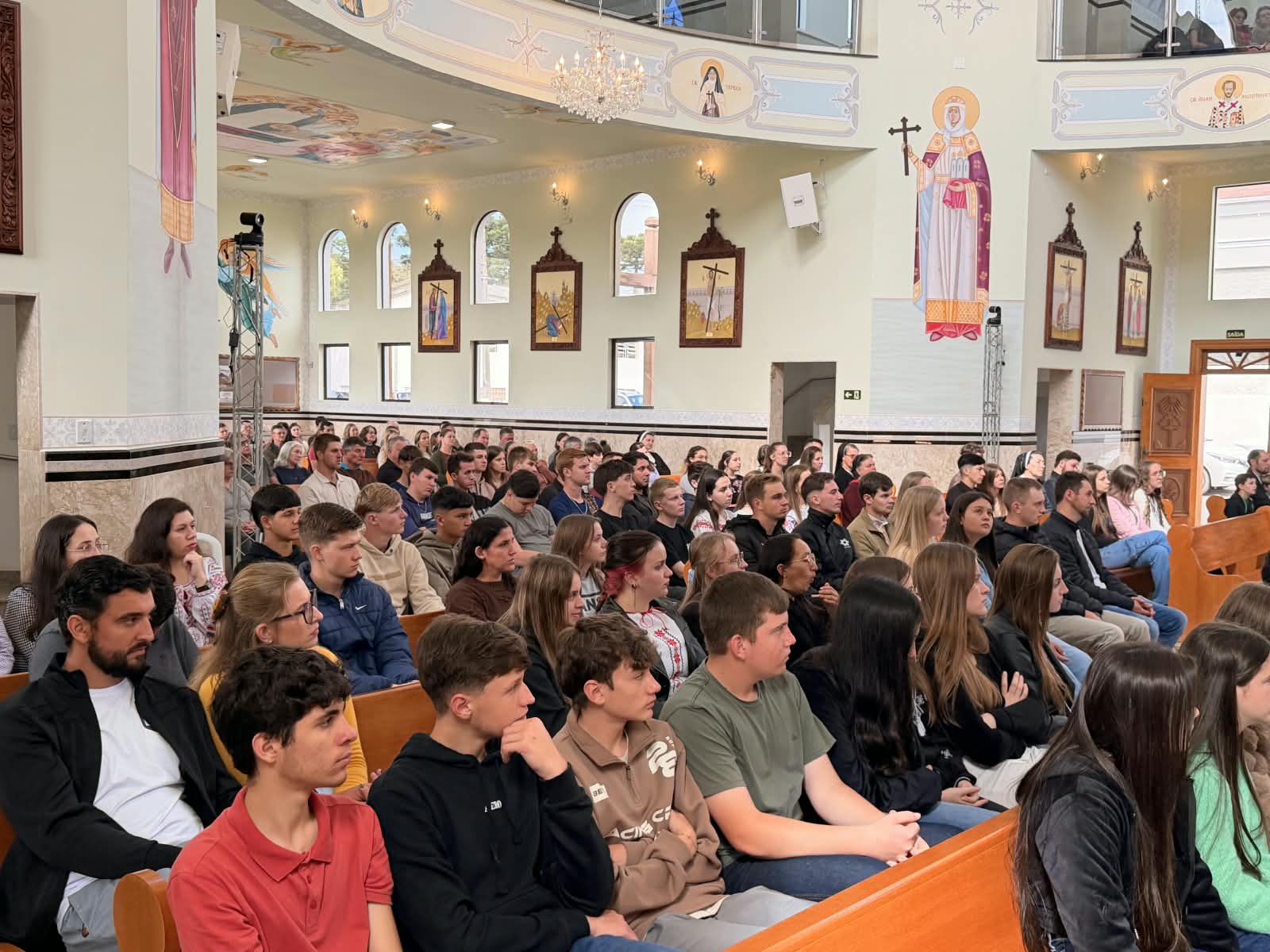
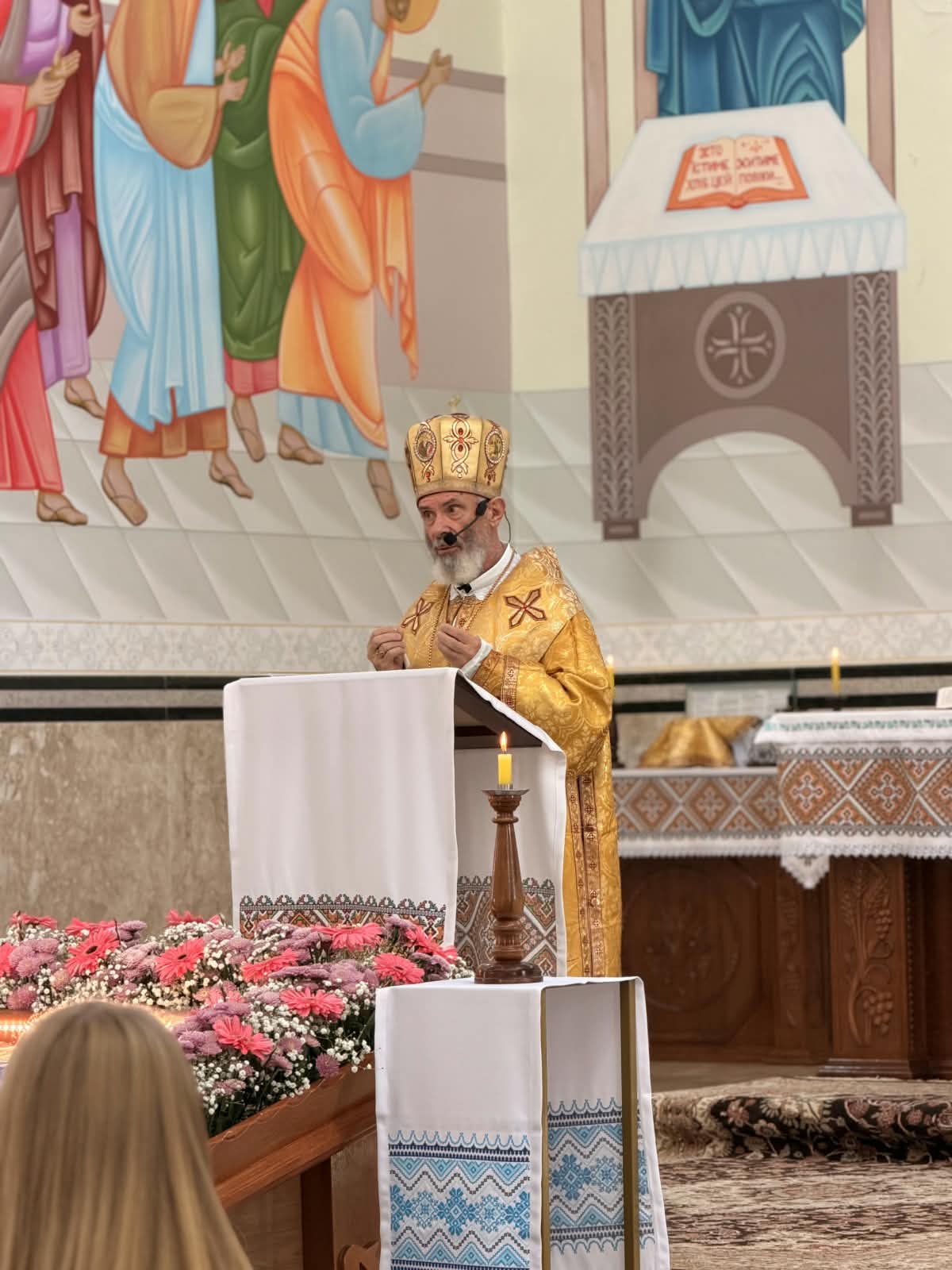
Another significant aspect of the gathering was the constant presence of Metropolitan Archbishop Volodemer Koubetch, who accompanied the program throughout all three days. His participation was not limited to liturgical celebrations: Archbishop Volodemer remained close to the young people during the activities and moments of fellowship and even joined them on Saturday’s hike in the mountains. His presence expressed the closeness of a shepherd who not only speaks to young people but is also willing to walk alongside them.
The program began on Friday, August 14, with the participants being welcomed by the Youth Ministry team, followed by the distribution of T-shirts and camp kits and, later, dinner. That evening, the opening featured one of the camp’s most impactful experiences.
Before entering the room where the first reflection would take place, the young people walked through a dark corridor with an intentionally unsettling atmosphere. At the beginning of the path, they encountered a coffin. The symbol was not intended merely to provoke fear, but rather to raise a fundamental question: Where are our choices leading our lives?
The coffin represented not only physical death but also the many forms of interior death that can affect a human being: when hope fades, dreams are abandoned, dignity is wounded, freedom turns into dependency, relationships are destroyed, and God’s presence gradually loses its place in one’s life. The dark corridor, in turn, symbolized the paths that can gradually lead a person away from the light, often through small choices that, when repeated, begin to determine the direction of one’s existence.
After passing through this path, participants entered the room where the reflections would take place. There, they encountered a display presenting realities such as pornography, addictions, and other forms of human enslavement. The purpose was not to condemn, but to awaken awareness and discernment regarding realities that may initially appear as freedom or pleasure but can, over time, become forms of imprisonment and emptiness.
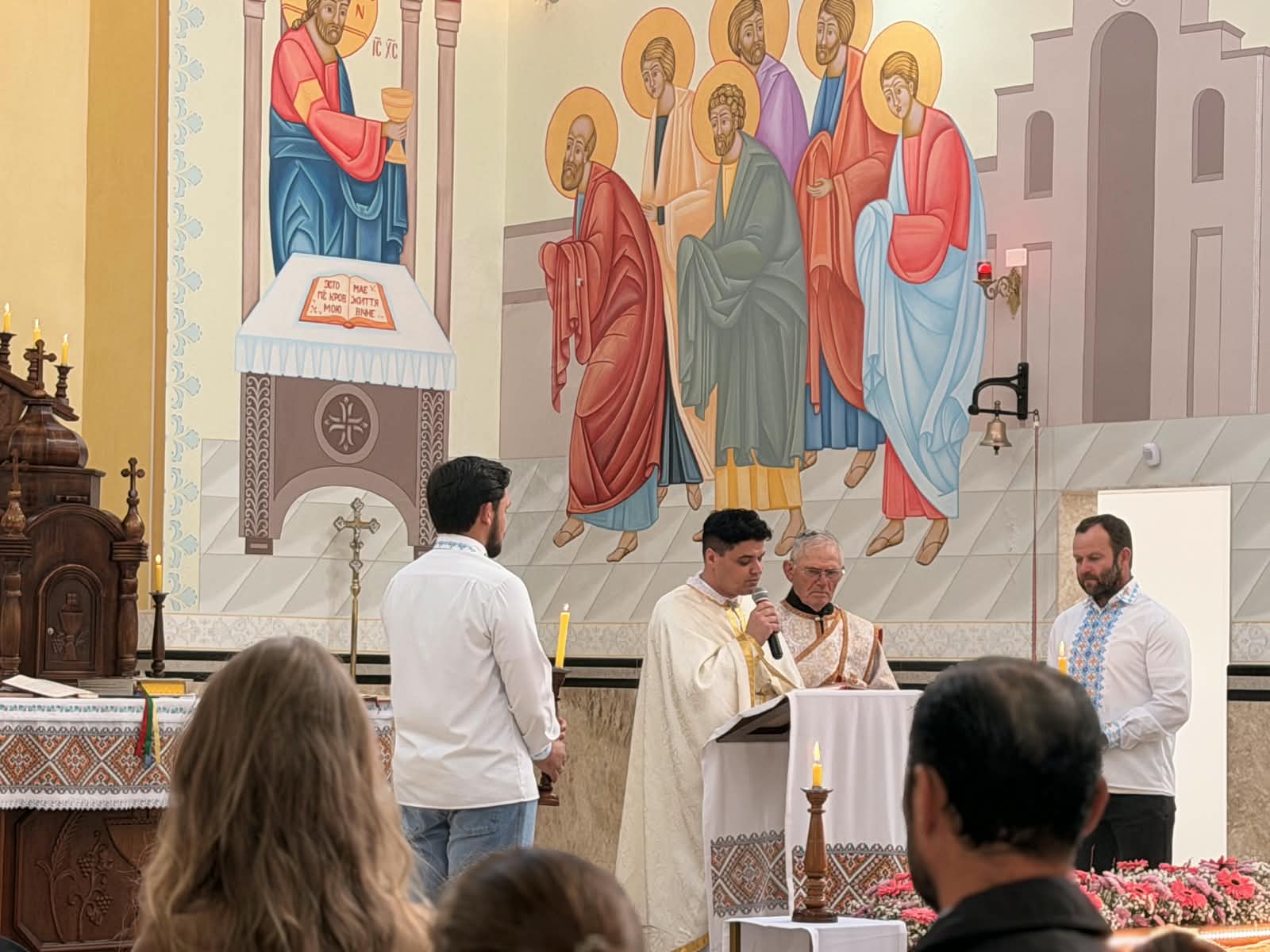
The first reflection addressed decision-making and overcoming spiritual lukewarmness, inviting each participant to recognize that faith cannot remain merely a family inheritance, a custom, or an external practice. At some point, what has been received must become a personal choice. The question left with the participants on that first evening was direct: What might be extinguishing the fire of God within me today?
After the break, the transformation of the environment itself communicated a message. The room, previously marked by darkness, was now illuminated. It symbolized the passage from darkness into light, reminding participants that the Christian experience does not end with the recognition of human weakness but points toward the possibility of conversion and new life.
Within this context, the gifts of the Holy Spirit were presented in a practical way and connected to everyday choices. The evening continued with a reflection on the presence and action of the Holy Spirit, emphasizing that God not only reveals what needs to be transformed but also grants the grace necessary to enlighten, strengthen, and guide.
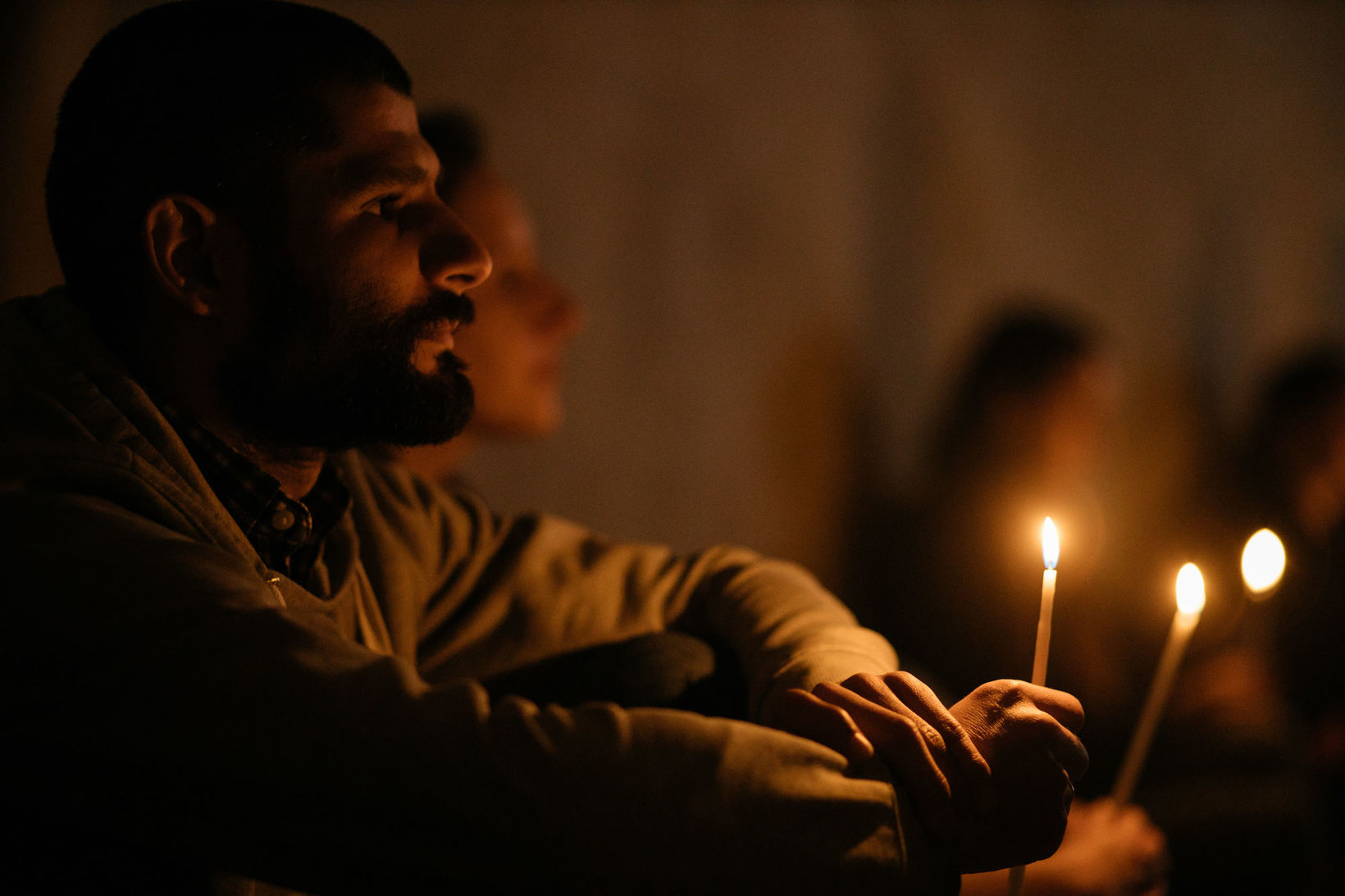
On Saturday, activities began at 7:00 a.m. with morning prayer in the chapel, led by Fr. Samoel. After breakfast, the young people resumed the formation sessions and participated in an activity involving candles and fire. Each participant received a lit candle, representing faith and the presence of God. At a certain point, the flames were extinguished, symbolizing how environments, influences, and choices can weaken what is most precious within the human heart.
The candles were then lit again, transforming the activity into a message of hope: what has gone out can burn again. Those who have fallen can rise; those who have wandered away can return; those who have lost their enthusiasm can begin again. The experience introduced a reflection on purification and perseverance, showing that faith cannot depend solely on moments of emotion but must endure through everyday life and be translated into concrete choices.
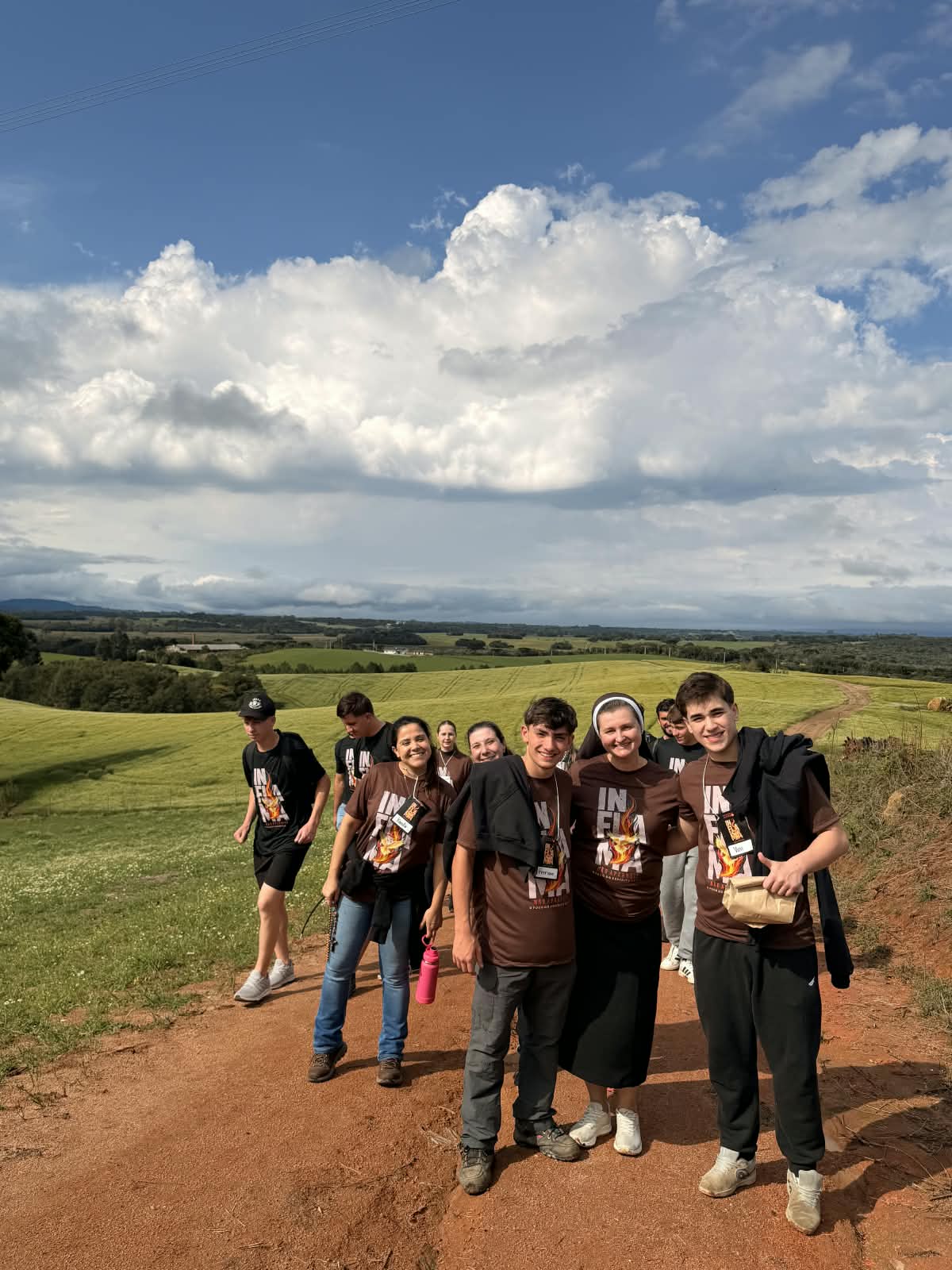
Later that morning, the reflections continued, followed by a rehearsal for the flash mob. After lunch, participants prepared to leave for the mountains, where they spent the afternoon hiking, enjoying fellowship, and contemplating nature.
The activity also included the participation of Metropolitan Archbishop Volodemer Koubetch, who walked the trail alongside the young people. Surrounded by nature, the hike provided an experience of fraternity and silence, offering a pause from a daily life often marked by an excess of screens, information, and constant stimulation. The climb itself became an image of life: there is effort, fatigue, and there are obstacles, but there are also horizons that reveal themselves only to those who persevere along the way.
Upon returning to Our Lady of Perpetual Help Retreat House, participants had the opportunity to celebrate the Sacrament of Reconciliation through individual confessions. Following the reflections experienced throughout the day, the encounter with forgiveness made the invitation to begin again and to experience God’s mercy tangible.
Dinner followed, and at 8:30 p.m. Eucharistic Adoration took place, becoming one of the most intense moments of prayer during the gathering. Before Christ, each participant was invited to present his or her story, struggles, choices, wounds, and hopes. Saturday continued in a spirit of fraternity with a luau, bringing together spirituality, music, joy, and fellowship.
Sunday began once again with morning prayer, and at 8:15 a.m. the reflection “Sending Forth and Proclamation” prepared the young people to return to their everyday lives. The message was clear: an experience of faith cannot remain confined to the days of a camp. Those who encounter Christ are called to bear witness to Him within their families, at school, at work, among friends, in their communities, and in every other area of life.
At 10:00 a.m., everyone gathered for the Divine Liturgy, presided over by Metropolitan Archbishop Volodemer Koubetch. The celebration became one of the culminating moments of the three-day gathering.
In his homily, Archbishop Volodemer addressed a particularly powerful message to the young people, returning to the heart of the entire proposal: do not let the fire of the Holy Spirit be extinguished. The image recalls Saint Paul’s exhortation: “Do not quench the Spirit” (1 Thessalonians 5:19). The Archbishop emphasized that the greatest challenge would begin precisely after the camp ended, when each participant returned to everyday routines, difficulties, and daily choices.
Keeping the flame alive means cultivating prayer, the Word of God, participation in the Divine Liturgy, sacramental life, communion with the Church, and consistency between faith and daily life. His message reinforced that these three days should not remain merely a pleasant memory but should produce concrete fruits of perseverance and Christian commitment.
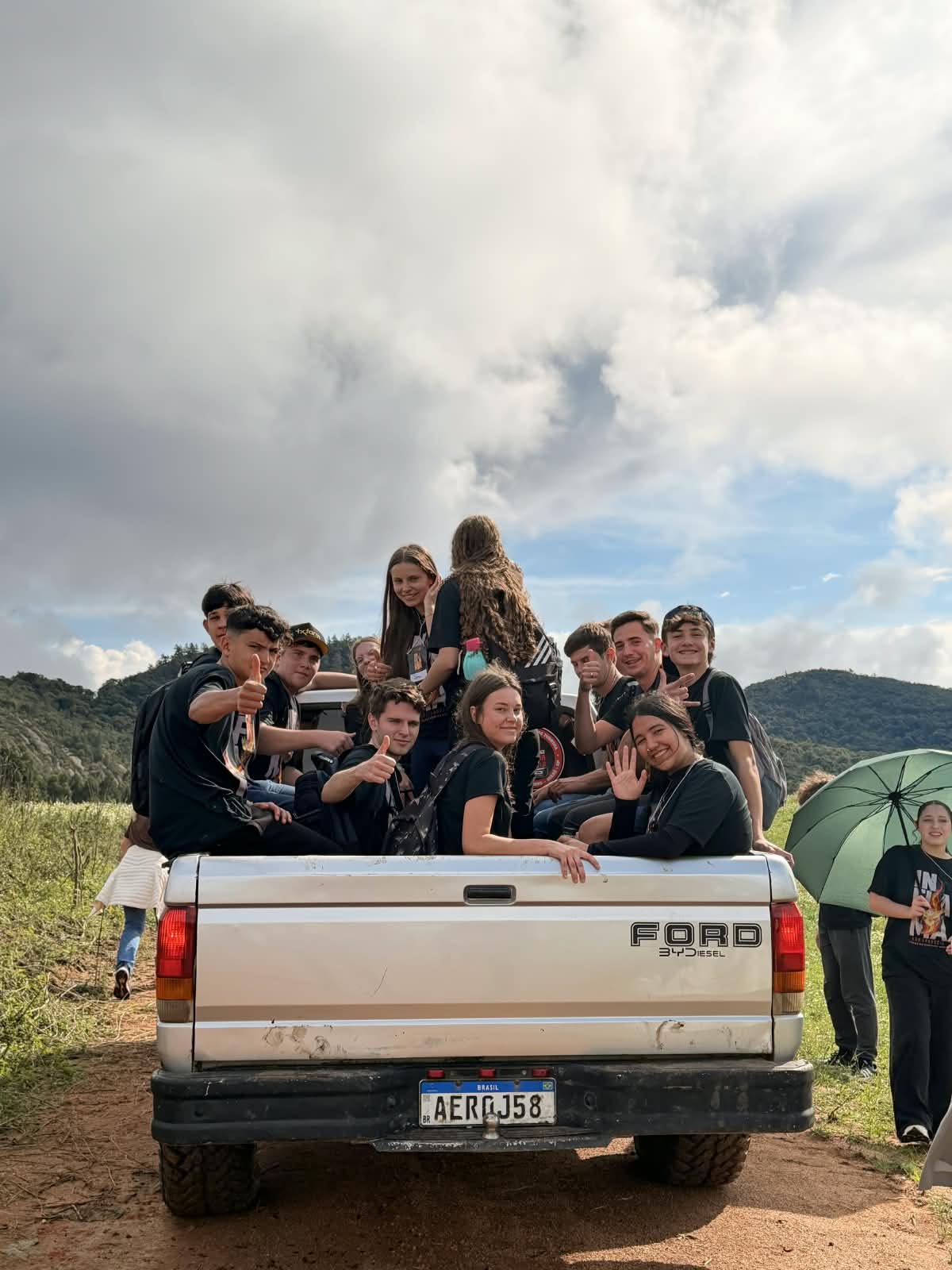
After the celebration, a flash mob performed in front of the church expressed the joy and communion built throughout the gathering. Before lunch, in the entrance hall of Our Lady of Perpetual Help Retreat House, the prayer of sending forth took place, led by Fr. Samoel, coordinator of the camp, together with the members of the Youth Ministry.
The sending forth gave meaning to the conclusion of the gathering: no one was simply returning home; each participant was called to return to his or her own reality with a mission. The journey experienced since Friday found its synthesis there: from darkness to light, from lukewarmness to decision, from an extinguished flame to a rekindled fire, from mercy to a new beginning, and from encounter to mission.
At the conclusion of the camp, there was also a profound sense of gratitude. Special thanks were extended to Our Lady of Perpetual Help Retreat House, in Colônia Marcelino, and to Fr. Neumir, its current coordinator and person responsible, for their hospitality and for opening the doors so that gatherings such as this one may continue to take place.
Gratitude was also extended to the Youth Ministry, the organizing teams, and everyone who worked behind the scenes. To those who prepared and served meals, washed dishes, cleaned and cared for the facilities, organized materials and spaces, and worked in hospitality, activities, music, liturgy, and logistics, heartfelt thanks were offered for a service that is often carried out quietly but is absolutely essential.
The same gratitude extends to families, communities, volunteers, collaborators, and benefactors who donated food and materials. Every contribution, large or small, helped make the gathering possible. This, too, is how the Church carries out her mission: many hands, different forms of service, and one shared willingness to serve.
At the end of the camp, one question remained—perhaps the best way to evaluate the fruits of the 4th Youth Camp:
What will each young person now do with the fire that God has kindled in his or her heart?
The true fruits will become visible in everyday life: when someone begins to pray again, finds the strength to abandon what has been holding them captive, seeks reconciliation, draws closer to God once more, takes on a ministry within the community, or helps another young person keep his or her faith alive.
“Inflama,” therefore, ceased to be merely the name of a gathering. It became a call and a mission.
The program came to an end, and each participant returned to his or her own reality. Yet the commitment that accompanied the three days remains and must now continue to be lived:
“Do not quench the fire of the Holy Spirit.”
ПІДТРИМАЙТЕ ДИВЕН СВІТ
проєкту

ЧИТАЙТЕ ТАКОЖ